Behind the Screen: Who's Actually Checking Your Prescription at an Online Pharmacy
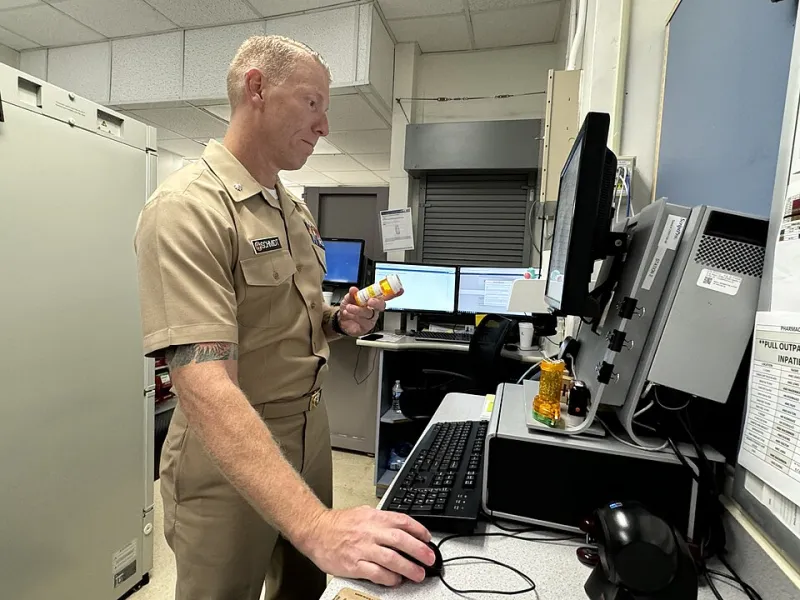
Photo: U.S. Navy NMRTC by Emily McCamy, Public domain, via Wikimedia Commons
Let's be honest — the first time you consider ordering ED medication online, a little voice in your head pipes up. Is this legit? Is some guy in a warehouse just mailing pills? It's a fair question, and the corner drugstore has spent decades earning your trust with the fluorescent lights and the beeping scanners. So let's pull back the curtain on what actually happens on both sides of this equation.
The Counter Experience, Decoded
When you drop off a prescription at your local pharmacy, here's the real sequence: a licensed pharmacist reviews your file, checks for drug interactions against your other medications, and fields your questions (if you ask them with the whole line waiting behind you). That's the gold standard, right?
Here's the thing most guys don't realize: a legitimate telehealth pharmacy runs the exact same checks. The pharmacist reviewing your Levitra order online is licensed in your state, often works for the same major pharmacy chains or accredited mail-order operations your insurance plan already uses. The difference isn't the oversight — it's the small talk.
The Safety Checks Nobody Sees
A reputable online pharmacy isn't a vending machine. Before your order ships, several things happen:
- Prescription verification. Real ED medication requires a prescription. Telehealth platforms connect you with a licensed US provider who reviews your health history — heart conditions, blood pressure meds, the works — before anything is approved.
- Interaction screening. Same software, same databases your corner pharmacist uses. Nitrates and Levitra don't mix whether you're standing at a counter or typing on your couch.
- State licensing. Legit online pharmacies display their credentials — look for NABP accreditation or LegitScript certification. If a site will sell you Levitra with no prescription and no questions asked, that's your red flag to close the tab.
- A real human pharmacist. Reputable services offer pharmacist consultations by phone or chat. You can ask about timing, side effects, or that heavy date-night dinner — without an audience.
Speed and the Refill Game
Here's where online genuinely wins. Your local pharmacy runs on business hours and your ability to get there. A telehealth pharmacy ships to your door, often in discreet packaging that doesn't announce its contents to your mailbox-peeking neighbors.
Refills are where it gets even better. Instead of realizing at 9 p.m. on a Friday that you're out, automated refill reminders and subscription-style ordering keep you stocked. Think of it like the difference between remembering to buy razors at the store versus them just showing up.
"Discreet" Doesn't Mean "Unregulated"
This is the misconception worth killing. Privacy and oversight aren't opposites — discretion just means the process is quiet, not shady. The same FDA-approved medication, the same licensed pharmacist sign-off, the same prescription requirements. The only thing removed is the awkward pause at pickup while the guy behind you pretends not to read the bag label.
When the Corner Store Still Makes Sense
To be fair: if you need medication right now, a local pharmacy is faster. If you have a complex medication list with multiple specialists involved, an in-person pharmacist who knows your full history has value. Online works best for maintenance meds like Levitra — predictable, recurring, and private.
The Bottom Line
The pharmacy counter you know isn't magic — it's a licensed pharmacist, a verification system, and a supply chain. Telehealth pharmacies replicate all three, then add doorstep delivery and refill automation on top. Do your homework (check accreditation, insist on a prescription requirement), and the little voice in your head can finally pipe down.